
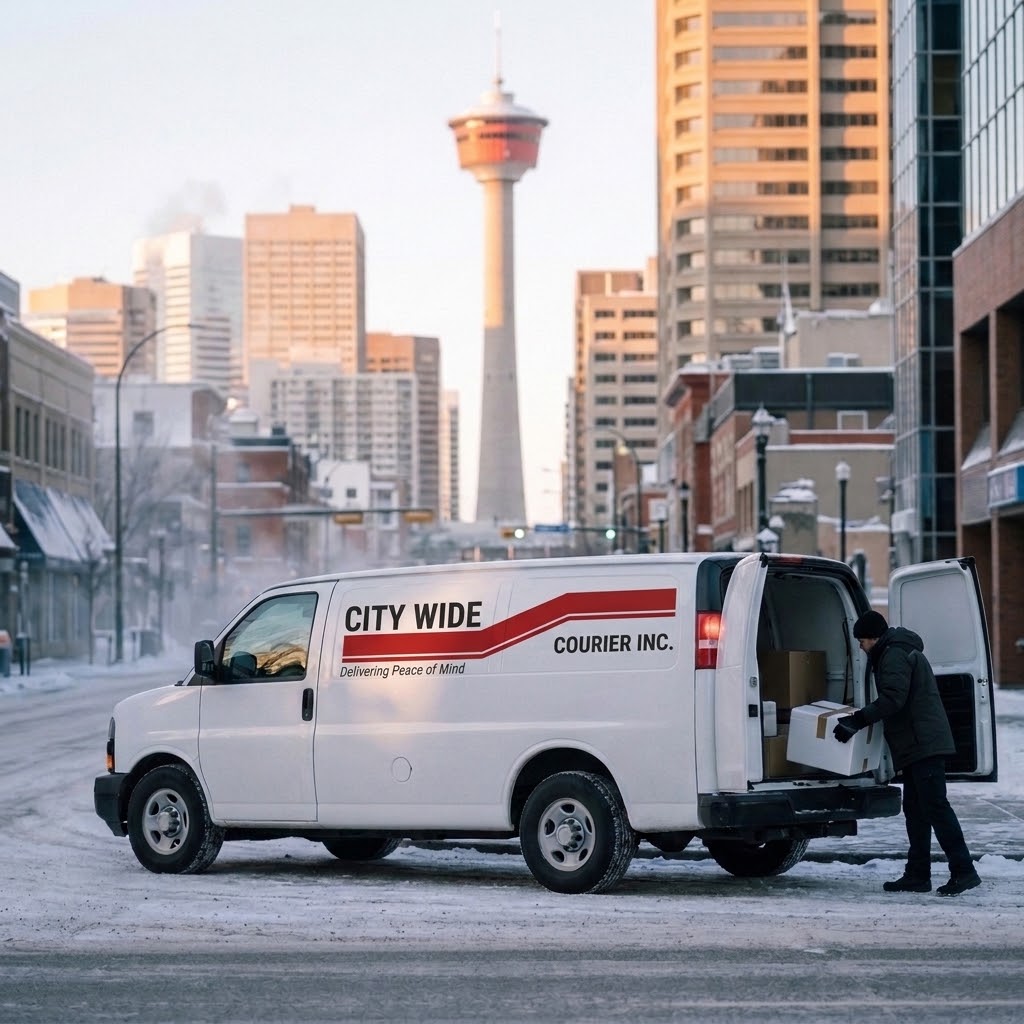
 Calgary is rough on cargo. A chinook can swing the temperature 20 degrees in a few hours. A van parked in the July sun can pass 40°C inside. And a January morning at -30°C will freeze liquids in an unheated cargo area.
That’s why climate-controlled logistics Calgary matters if you move medicine, food, flowers or lab samples. Your goods are only as good as the temperature they travel at.
We’ve been running deliveries across the city since 1986. Here’s what we’ve learned about getting sensitive goods from A to B without losing them to heat, frost or delay.
What climate-controlled transport actually means
Climate-controlled transport keeps goods inside a set range from pickup to drop-off. The range depends on the product. Vaccines sit at 2 to 8°C. Chocolate just has to stay cool enough that it doesn’t melt or turn chalky.
Most goods only need steady temperatures and a short trip. A freezer truck is overkill for a box of cosmetics.
Three things decide how a shipment travels: the label range, the length of the trip and the weather on the day. Get those right and most loads arrive in good shape.
Temperature-controlled vs climate-controlled
Temperature-controlled transport watches one thing: the thermometer. Climate-controlled transport also looks at humidity, light and rough handling.
Health Canada uses the phrase “environmental control” for drugs for that reason. Its guideline, GUI-0069 on storing and transporting drugs, calls temperature one of the most important things to control. It applies to everyone who touches a drug in transit, including carriers.
Common temperature ranges
| Category | Typical range | Common examples |
| Refrigerated | 2 to 8°C | Vaccines, insulin, some lab samples, dairy |
| Controlled room temperature | 15 to 25°C | Most tablets, cosmetics, chocolate |
| Cool and frost-free | Above 0°C to about 10°C | Cut flowers, fresh produce, fresh pasta |
| Frozen | -18°C or colder | Frozen meals, ice cream, some biological products |
The product label or the manufacturer sets the real range. Go by that every time.
Goods that need climate-controlled transport Calgary
Pharmacy and medical supplies
Clinics, pharmacies and medical labs send items that spoil or lose strength when they get too warm or too cold. Prescriptions, vaccines, specimens and wound-care products all fall here.
Our pharmaceutical courier service in Calgary is built around temperature-aware, time-critical runs. Tell us the range on the label when you book and we’ll plan around it.
Food and perishables
Bakeries, caterers, specialty grocers and meal prep companies all work against a clock. Canadian food safety guidance puts the danger zone between 4°C and 60°C. Every minute a cold dish spends in that zone counts against you.
Hot dishes need the opposite care. Keep them above 60°C in a sealed, insulated container. Cold dishes stay below 4°C. Book the shortest service that fits the pickup window.
Flowers, chocolate and gifts
Cut flowers wilt fast in a hot van. Chocolate blooms white or melts into its box. Valentine’s Day and Mother’s Day are the worst weeks for both, because every florist and chocolatier in town is shipping at once.
Electronics, art and instruments
Lithium batteries lose power in deep cold. A phone or tablet carried from a -25°C van into a warm office can fog up with condensation inside.
Guitars and violins can crack when they go from freezing to heated air too fast. Leave them in the case for an hour after delivery.
[Insert Image 2 here, near the pharmacy and food section]
Why Calgary makes temperature control harder
Most cities have one weather problem. Calgary has several.
Winter lows
Lows of -30°C aren’t rare in January. A cargo area loses heat every time a door opens, so a van with six stops loses more than a van with one.
Water-based products, some medications and batteries are the usual victims.
Summer heat and traffic
A 25-minute trip can turn into 60 when Deerfoot Trail or Crowchild Trail backs up at 4:30 p.m. Every extra minute is more exposure.
A parked vehicle makes it worse. Cabs heat up fast in direct sun, and cargo areas follow.
Chinook swings
A chinook can lift a morning at -20°C to above freezing by afternoon. Coolant you prepared for a cold day may be wrong by lunch. Pack for the weather at pickup time and drop-off time.
Check the forecast the night before and again at pickup. If the temperature will jump or drop more than 10 degrees, tell your courier so the coolant matches the day.
What to look for in climate-controlled logistics Calgary
A good provider does a handful of things well. Here’s the checklist we’d use if we were hiring a courier ourselves.
- A dedicated vehicle for sensitive loads. Shared loads mean extra stops and extra open doors. A hot shot delivery sends one vehicle with only your package and no other stops.
- Fast dispatch. The sooner a driver reaches you, the less time your goods spend waiting on a dock. We send a driver the moment a request comes in.
- A person who answers the phone. When a delivery runs late, you want to talk to someone who knows your account. Dale answers directly. Our clients mention that more than anything else on our testimonials page.
- Proof of delivery. You need the time and the name of whoever signed. One client told us the order history section saved them when another company misplaced a package.
- The right vehicle. Our fleet includes cars, vans and five-ton trucks with power lift tailgates, so the size of the load never forces a bad compromise.
- Real insurance. Ask what’s covered for your goods. Our drivers are licensed, insured and in uniform.
Questions to ask before you book
- What temperature range does the label call for?
- How long can the product sit outside that range?
- Will someone be at the door when the driver arrives?
- What happens if traffic or weather causes a delay?
A courier who can’t answer the last one probably hasn’t planned for it.
Same-day, hot shot or next-day: which one fits?
Shorter trips mean less exposure. That’s the whole logic.
| Service | Best for | Why it matters for temperature |
| Same-day courier | Urgent prescriptions, fresh food, gifts | Pickup usually happens within 30 to 60 minutes, with delivery typically in 2 to 3 hours |
| Hot shot | Tight temperature windows, high-value goods, trips to Edmonton or Red Deer | A dedicated vehicle with no other stops |
| Next-day delivery | Stable goods on regular routes | Cheaper, but the package waits overnight |
| Parcel delivery | Boxes of any size, including oversized items | Handles bulky loads that need more room |
Here’s my take. If your product has a tight temperature window, choose same-day or hot shot. Next-day suits cosmetics and dry goods. I wouldn’t put insulin on an overnight route.
How to pack goods for the trip
A good vehicle helps, but packaging does a lot of the work. These steps apply to nearly every shipment.
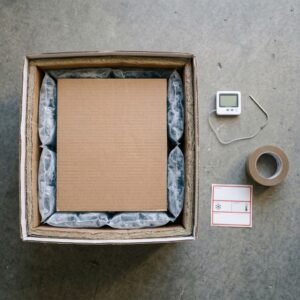
Prepare the box
Insulation. Use an insulated shipper or a cooler with a tight lid. Fill empty space with paper or foam so nothing shifts and air can’t circulate.
Coolant. Condition gel packs the day before. Chill them in a fridge for refrigerated goods or freeze them for frozen goods. Keep frozen packs away from anything that mustn’t freeze, because direct contact can ruin it. A layer of cardboard between the pack and the product fixes that.
Label it clearly
Mark the box “temperature sensitive” and write the required range on the outside. Add the receiver’s name and phone number plus the hours they’re open.
Time the handoff
Pack as close to pickup time as you can. Have someone at the door when the driver arrives. A box on a loading dock is a box heating up or freezing.
Take a photo of the packed box before you seal it. For high-value goods, tuck a small digital thermometer inside. The reading at drop-off shows whether the trip stayed in range.
[Insert Image 3 here, in the packing section]
Common mistakes that spoil a shipment
- Booking late in the day for a receiver who closes at 5 p.m.
- Forgetting to tell the courier the temperature range
- Leaving the box outside while waiting for pickup
- Pressing frozen gel packs directly against product that can’t freeze
- Picking next-day delivery to save money on goods with a tight window
- Skipping the insurance conversation on high-value items
Most of these cost nothing to fix. They just need a quick conversation before the driver is dispatched.
Benefits and drawbacks of climate-controlled delivery
| Benefits | Drawbacks |
| Less spoilage and fewer returns | Costs more than a standard courier run |
| Goods arrive within label requirements | Needs extra prep on your end |
| Fewer customer complaints | Deep-freeze and validated cold chain loads may need a specialist |
| Peace of mind on high-value items | Tight windows leave less room for delays |
The cost is real. So is the cost of throwing out a spoiled pallet.
Delivery beyond Calgary
We cover all of Calgary plus Airdrie, Cochrane, Chestermere and Okotoks. For longer runs, hot shot service reaches Red Deer, Edmonton, Lethbridge, Medicine Hat and Grande Prairie.
Longer trips mean more time in the cargo area, so packaging matters even more. Edmonton is roughly 3 hours up the highway. Plan your coolant for the full drive plus a buffer.
Plan the handoff at the other end too. Give the driver a name, a phone number and a drop-off window, so nobody waits at a locked door.
Frequently asked questions
Can I get a pickup this morning?
In most cases, yes. We dispatch a driver right after your request. Pickup typically happens within 30 to 60 minutes and delivery within 2 to 3 hours depending on distance. Call early, since our office closes at 5 p.m.
Do I need an account?
No. You can book by phone at (403) 246-8349 or through our quote form. We take cash, Visa and Mastercard.
Can you deliver sensitive goods outside Calgary?
Yes. Hot shot delivery covers Alberta, including Edmonton, Red Deer, Lethbridge and Medicine Hat. Tell us the temperature range when you ask for a quote.
Are my goods insured?
All our drivers are licensed and insured. If your shipment is high in value, mention it when you request your quote so we can talk through coverage.
Do you work weekends?
Our regular hours are Monday to Friday, 8 a.m. to 5 p.m. For after-hours emergencies, call us and we’ll do our best to help.
What if my product has strict storage rules?
Tell us what the label says. If it needs deep-freeze or full data logging, we’ll say so up front and won’t promise what we can’t deliver.
Conclusion
Climate-controlled logistics in Calgary comes down to a few things: know your temperature range, pick the fastest service that fits and pack the box properly. Short trips beat long ones. Clear labels beat guesswork.
If you send pharmacy items, food, flowers or electronics, talk to your courier before the day of the delivery. Ask about the vehicle, the timing and what happens if something goes wrong.
Ready to book? Request a free quote or call us at (403) 246-8349.